Saturday, December 31, 2011


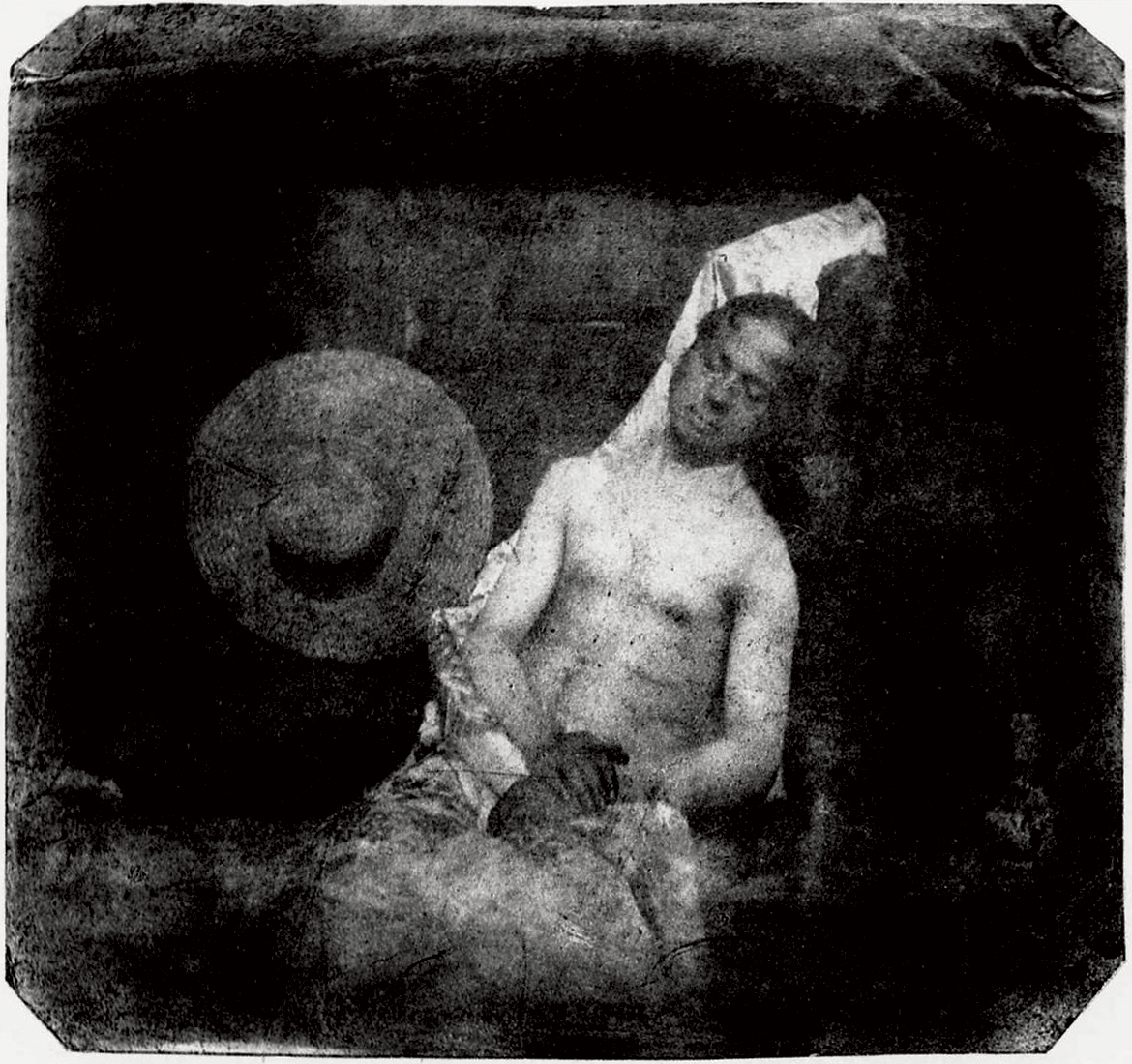
Recently I have found myself intrigued by the work of Hippolyte Bayard and his image Self Portrait as a drowned man. In which Bayard reflects upon his circumstances in 1840, and acts out the emotion, after he was pipped at the post by Daguerre as the inventor of photography. Daguerre was gaining all of the attention as the inventor of photography. The image above was probably the first self portrait in the history of photography and yet it was an act.

I have also been exploring a number of ideas around Neurological Expressionism. Expressionisms’ logical development if you like a form in which the function of the brain is considered as part of the aesthetic development in a series of photographic images.
To achieve this I have constructed a small studio at home. I project patterns of light and photograph myself moving through the field that is created by those lights. Because I am sensitive to light when I move during the exposure a heightened sense of brain activity is actually occurring during the exposure. Each composition is used to create a theoretical expressionist model that is broken down by subsequent patterns of light.  I use simple behavioural models., such as the Heirachy of needs or models from contemporary psychology such as the Aspergers’ Spectrum behaviours.

I like Bayard’s self – portrait because it plays with the photographic mediums ability to trick us and to fool us. I thought the man was dead at first. And my point of view is that this kind of deception is an important part of identity. 

Friday, December 30, 2011


'A Photo is a small voice, at best, but sometimes - just sometimes - one photograph or a group of them can lure our senses into awareness. Much depends upon the viewer; in some, photographs can summon enough emotion to be a catalyst to thought.'


Eugene Smith.

Saturday, October 22, 2011

Body in Space


And so an image like “body and space” plays with the exterior form of the body as it has been defined by points of light. At the same time it is about a show or the presentation of oneself in a public context. The details of the head have been lost in this image replaced with a dark void that suggests that the body is a shell or suit.

Thursday, October 6, 2011

Sadness of Light


Neurological Expresssionism is a style of work that suggests light effects the way we feel. We know this, after the weather has been dull the absense of sunshine creates introspection. The projection of light patterns creates a physiological and emotional response in the subject. This image titled ‘In the Sadness of Light’ looks at the formal and emotional qualities of light patterns of both the presence and absence of light. For a person with Epilepsy light threatens consciousness.

Tuesday, October 4, 2011


                                                                                                                   0.023

0.023 a very short amount of time, a fraction of a second, the form of the body breaks down and acts as if it is an item of shopping moving quickly across a scanner.

Monday, October 3, 2011

Photo Sensitive Epilepsy

Richard Baldwin was born in the small dusty town of Walgett in outback Australia, known for its location at the junction of two rivers and its flat landscape. Although generally a good boy Richard was prone to episodes of misbehavior. This is how his career as a visual artist began; dressed in his best clothes for the important occasion of his brother’s birth, Baldwin took the black paint from the laundry and painted the outhouse and himself in a style resembling the work of Franz Kline. A few years later whilst still a child, Richard was diagnosed with a form of Photo- Sensitive epilepsy. This explains his attraction to both pattern and photography. In 1984 he completed an exhibition titled “If it Fits”, an important show for Baldwin. Mostly self portraits, part documentary and expressionist, the show was the basis for Neurological Expressionism -stimulating neurological responses during the moment of exposure using light patterns. Neurological Expressionism includes aspects of parody, satire and light sensitivity. Baldwin is currently working on a series of images focusing on the performance and self-portraiture in the context photography.